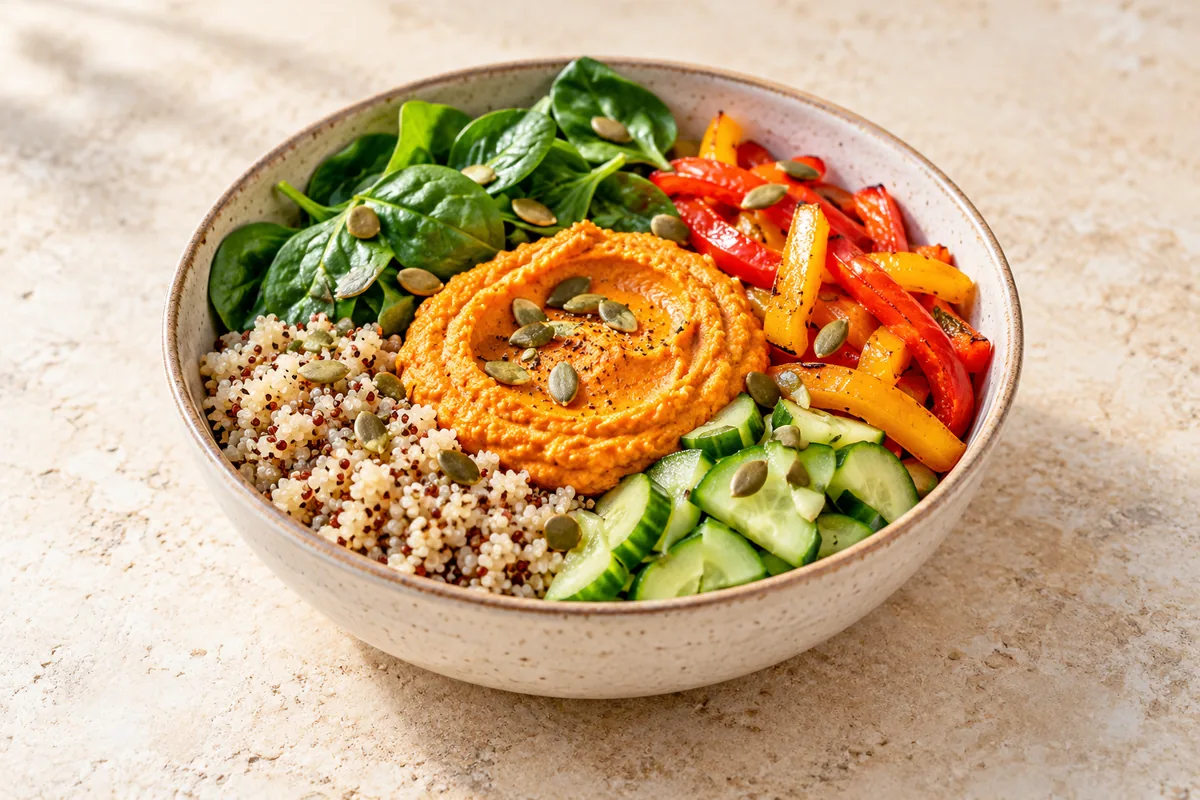
Hummus is tricky on a low-FODMAP diet: chickpeas and tahini both contain GOS. Our solution is a hummus in which roasted carrot brings creaminess and colour. That keeps the chickpeas exactly within the Monash serve. With quinoa, kabocha and crunchy raw vegetables, it becomes a complete, colourful meal.
Please note: this article is general information, not personal medical advice. If you have gut symptoms, talk to your GP or a FODMAP-trained dietitian.
Ingredients
Carrot hummus
- 168 g canned chickpeas, drained weight (42 g per person; rinsed well)
- 200 g carrots (in chunks)
- 30 g tahini (2 tbsp)
- 42 g garlic-infused oil (3 tbsp)
- 20 ml lemon juice (approx. 20 g; from ½ lemon)
- 2 g ground cumin (1 tsp)
- 3 g salt, for the hummus and vegetables (½ tsp)
- 45 ml ice-cold water (approx. 45 g; 3 tbsp, 30 to 60 ml as needed)
Bowl
- 200 g quinoa, dry
- 400 ml water, for the quinoa (approx. 400 g)
- 300 g kabocha squash (diced)
- 14 g olive oil (1 tbsp)
- 1 g smoked paprika (½ tsp)
- 150 g cucumber (diced)
- 80 g radishes (sliced)
- 80 g baby spinach
- 30 g pumpkin seeds
- 9 g sesame seeds (1 tbsp)
- 10 g curly parsley (1 small handful)
Method
- Roast. Preheat the oven to 200 °C. Toss the kabocha with half the olive oil, the smoked paprika and a pinch of salt. Toss the carrots separately with the rest of the olive oil and a pinch of salt. Roast both on a tray for 25 to 30 minutes, until soft and lightly caramelised.
- Quinoa. Rinse the quinoa and bring it to the boil with 400 ml water. Cover and cook over low heat for 15 minutes, then leave to steam for 5 minutes.
- Blend the hummus. Let the carrots cool for 5 minutes. Blend the chickpeas, roasted carrots, tahini, garlic-infused oil, lemon juice, cumin and the rest of the salt in a food processor. Add the ice-cold water little by little until the hummus is silky smooth.
- Toast the seeds. Toast the pumpkin seeds and sesame seeds in a dry frying pan over medium-high heat for 2 to 3 minutes, until fragrant. Chop the parsley.
- Build. Divide the quinoa, kabocha, cucumber, radishes and spinach between four bowls. Spoon a quarter of the hummus (about 125 g) into each bowl.
- Finish. Scatter with the pumpkin seeds, sesame seeds and parsley and serve straight away.
FODMAP check
Canned chickpeas — Low FODMAP
Drained canned chickpeas are low FODMAP in a small serve (Monash data via FODMAP Everyday). Here it is 42 g per person. Rinse them well: according to Monash, GOS leaches into the canning liquid. This applies to canned chickpeas; we have not checked dried, home-cooked ones.
Tahini — Low FODMAP
Tahini is low FODMAP in a normal serve (Monash data via FODMAP Everyday). Here it is 7.5 g per person.
Stacking — Portion matters
Chickpeas and tahini both contain GOS. Together in one dish they can add up (see The Irritable Vegan). That's why we deliberately keep the chickpea and tahini serves small. Don't have a second helping of hummus.
Carrot and kabocha — Low FODMAP
Both are on Monash's low-FODMAP shopping list. Here it is 50 g carrot and 75 g kabocha per person. We have not checked butternut squash, so use kabocha.
Pumpkin and sesame seeds — Low FODMAP
Pumpkin seeds and sesame seeds have a generous low-FODMAP serve (Monash data via George Eats). Here it is about 7.5 g pumpkin seeds per person.
Quinoa and raw vegetables — Low FODMAP
Quinoa, cucumber, radish and spinach are on Monash's low-FODMAP shopping list, at standard serves.
Lemon juice — Uncertain
We could not check the amount of lemon juice with Monash. Half a lemon for four people is small, but check the app if you are sensitive.
Editor's tip
Roast a double batch of carrot and keep the chickpeas the same: you get more hummus without raising the GOS per person. The hummus keeps for 3 days in the fridge.