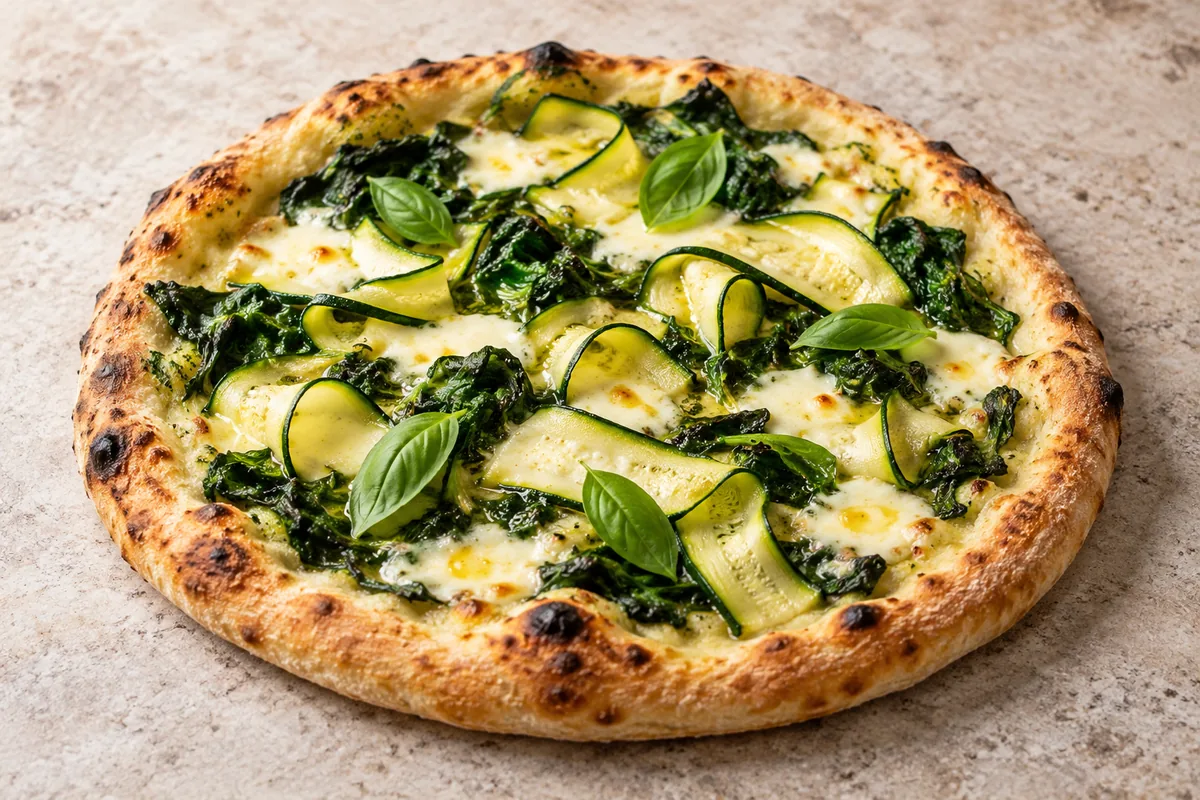
Pizza on a low-FODMAP diet? It works fine, as long as you watch two things: the dough and the amount of topping. We chose a gluten-free base and toppings whose Monash serve per person we checked. Green, crisp and cheerful. Buon appetito!
Please note: this article is general information, not personal medical advice. If you have gut symptoms, talk to your GP or a FODMAP-trained dietitian.
Ingredients
Dough (2 pizzas of about 28 cm)
- 300 g gluten-free bread or pizza flour blend (without soy or legume flours)
- 7 g dried yeast (1 sachet)
- 4 g sugar (1 tsp)
- 6 g salt (1 tsp)
- 28 g olive oil (2 tbsp)
- 250 ml lukewarm water (approx. 250 g; follow your blend's packet)
Sauce
- 200 g canned tomatoes, puréed (½ can)
- 14 g garlic-infused oil (1 tbsp)
- 1 g dried oregano (1 tsp)
- 0.5 g salt (pinch)
Topping
- 160 g mozzarella, torn
- 120 g fresh spinach
- 150 g green pepper, in strips (about 1)
- 60 g black olives, pitted (about 15 small)
- 20 g Parmesan, grated
- 10 g fresh basil (1 small handful)
Method
- Knead the dough. Mix the flour blend, yeast, sugar and salt. Add the olive oil and lukewarm water and knead for 3 to 5 minutes into a smooth, slightly sticky dough. Cover and leave to rise in a warm place for 45 minutes.
- Oven and sauce. While the dough rises, preheat the oven with a baking tray or pizza stone to 240 °C for at least 30 minutes. Stir together the tomatoes, garlic-infused oil, oregano and the pinch of salt.
- Pre-bake. Divide the dough in two. Press each half out on baking paper into a thin base of about 28 cm and pre-bake for 6 to 8 minutes at 240 °C.
- Top. Wilt the spinach in a dry pan over medium-high heat for 1 to 2 minutes and squeeze it out well. Spread the bases with sauce and scatter over the spinach, pepper, olives, mozzarella and Parmesan.
- Finish baking. Bake for 8 to 10 minutes at 240 °C, until the cheese bubbles and the edges are golden. Scatter with basil and cut each pizza into quarters (2 slices per person).
FODMAP check
Gluten-free flour mix — Swap
Wheat contains fructans. Gluten-free products are more often low FODMAP, but sometimes contain soy or legume flours, Monash warns. So read the label of your mix.
Spelt sourdough dough — Uncertain
Traditionally made spelt sourdough bread is often called low FODMAP; we have not been able to confirm this on a Monash page ourselves, so check the Monash app. That is down to the long fermentation (usually more than 12 hours), during which yeast and bacteria break down the FODMAPs. Homemade spelt sourdough pizza dough has not been tested, so we don't know if it scores the same. Only try it after step 1, with your dietitian.
Canned tomatoes — Low FODMAP
Canned tomatoes are low FODMAP in a limited serve (2022 Monash update, via Karlijn's Kitchen and FODMAP Everyday). Here it is 50 g per person. Ready-made pizza sauce often contains onion or garlic; read the label or make your own.
Mozzarella — Low FODMAP
Mozzarella is low FODMAP in a limited serve (Monash data via George Eats). Here it is 40 g per person; if you want more cheese, check the Monash app.
Spinach — Low FODMAP
Spinach is on Monash's low-FODMAP shopping list. Here it is 30 g per person.
Green pepper — Low FODMAP
Green pepper is on Monash's low-FODMAP shopping list (retested in the 2022 Monash update, via Karlijn's Kitchen). Here it is about 38 g per person. Note: red pepper has a much smaller low-FODMAP serve, so don't swap without checking.
Black olives — Low FODMAP
Black olives are low FODMAP in a normal serve, according to Monash as cited by Yummyble. Here it is 15 g per person.
Stacking — Portion matters
Each topping stays within its own serve, but several small serves in one meal can add up (FODMAP stacking, see The Irritable Vegan). So keep the pizza modestly topped and don't pair it with other 'portion matters' foods.
Editor's tip
Gluten-free dough is stickier than wheat dough. Work with wet hands or a sheet of baking paper on top, and always par-bake: that way the base turns crisp instead of chewy.
Sources
- Low FODMAP Shopping List — Monash FODMAP
- Gluten and IBS: Understanding FODMAPs vs Gluten — Monash FODMAP
- Spelt products and FODMAPs — Monash FODMAP
- Sourdough processing & FODMAPs — Monash FODMAP
- Monash University update: tomato and bell pepper — Karlijn's Kitchen
- Are Tomatoes & Tomato Products Low FODMAP? — FODMAP Everyday
- Is mozzarella low FODMAP? — George Eats
- Are Olives Low FODMAP? — Yummyble
- 3 Low FODMAP Hummus Recipes — The Irritable Vegan